
A Sunday with Grandma
Practice German while learning about Sunday traditions.
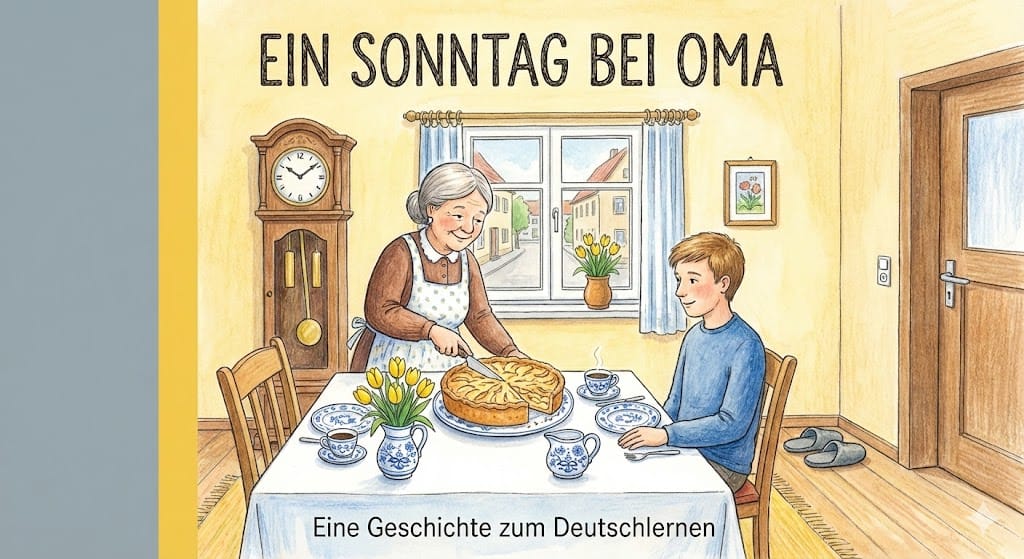
Ein Sonntag bei Oma
A German Learning Story (Level A2)
Kapitel 1: Der Anruf
Am Samstagmorgen klingelte mein Telefon. Es war meine Oma, Gerda. Sie hat eine sehr freundliche Stimme. "Hallo! Hast du morgen Zeit?", fragte sie. "Ich möchte dich zum Kaffee und Kuchen einladen."
In Deutschland plant man Termine oft im Voraus. Man besucht niemanden spontan ohne Anruf. "Ja, gerne, Oma!", antwortete ich. "Komm bitte pünktlich um 15:00 Uhr", sagte sie. 15:00 Uhr ist die traditionelle Zeit für Kaffee. Ich schrieb den Termin sofort in meinen Kalender. Pünktlichkeit ist sehr wichtig in meiner Familie.
English Translation
Verständnis (Comprehension)
1. Die Oma rief am Sonntagmorgen an.
2. Wann soll der Besuch sein?
3. In Deutschland besucht man Leute oft ohne Anruf.
Kapitel 2: Der Ruhetag
Am Sonntagmorgen wachte ich auf. Es war sehr still in meiner Straße. In Deutschland ist der Sonntag ein "Ruhetag". Das bedeutet, die meisten Geschäfte sind geschlossen. Niemand arbeitet im Büro und die LKWs dürfen nicht auf der Autobahn fahren.
Ich hörte keine Rasenmäher und keine laute Musik. Es ist verboten, am Sonntag laut zu sein. Man darf auch keine Glasflaschen in den Container werfen, weil das zu laut ist. Ich genoss die Ruhe und las ein Buch im Bett. Es war sehr entspannend.
English Translation
Verständnis
1. Die Geschäfte sind am Sonntag geöffnet.
2. Was darf man am Sonntag *nicht* machen?
3. LKWs dürfen am Sonntag nicht auf der Autobahn fahren.
Kapitel 3: Blumen finden
Es war 14:00 Uhr. Ich musste mich fertig machen. Ich wollte Oma nicht mit leeren Händen besuchen. Es ist höflich, ein kleines "Mitbringsel" zu haben. Normalerweise kaufe ich Pralinen oder Blumen.
Aber die Supermärkte waren zu! Ich hatte ein Problem. Dann erinnerte ich mich: Blumenläden am Bahnhof sind oft sonntags geöffnet. Ich lief schnell zum Bahnhof. Zum Glück war der Laden offen. Ich kaufte einen schönen Strauß mit gelben Tulpen. Oma liebt die Farbe Gelb. Jetzt war ich bereit.
English Translation
Verständnis
1. Was wollte die Person kaufen?
2. Alle Supermärkte waren geöffnet.
3. Wo kaufte die Person die Blumen?
Kapitel 4: Der pünktliche Zug
Ich ging zum Gleis 4. Ich nahm die S-Bahn zu Oma. Auf der Anzeigetafel stand: "Ankunft 14:32". Ich schaute auf meine Uhr. Der Zug kam genau um 14:32 Uhr an. Die deutsche Bahn ist meistens pünktlich, besonders am Sonntag.
Ich stieg ein und setzte mich. Viele Leute trugen Wanderkleidung. Sie machten Ausflüge in die Natur. Ich war ein bisschen nervös. Ich wollte nicht zu spät kommen. "Fünf Minuten vor der Zeit ist des Deutschen Pünktlichkeit", sagt man. Ich wollte genau um 14:55 Uhr an Omas Tür sein.
English Translation
Verständnis
1. Wann kam der Zug an?
2. Die Leute im Zug trugen Anzüge und Krawatten.
3. Wann wollte die Person an der Tür sein?
Kapitel 5: Ankunft und Hausschuhe
Ich klingelte an der Tür. Oma öffnete sie sofort. Sie trug eine schicke Bluse und eine Perlenkette. "Hallo mein Schatz!", rief sie und umarmte mich. Ich gab ihr die gelben Tulpen. Sie freute sich sehr.
Bevor ich in das Wohnzimmer ging, zog ich meine Straßenschuhe aus. Das ist in Deutschland sehr wichtig. Man trägt keinen Schmutz von der Straße in die Wohnung. Oma gab mir ein Paar "Gästepantoffeln". Sie waren aus grauem Filz und sehr warm. Jetzt fühlte ich mich wie zu Hause.
English Translation
Verständnis
1. Was trug die Oma?
2. Man behält die Straßenschuhe in der Wohnung an.
3. Was gab die Oma dem Besuch?
Kapitel 6: Der gedeckte Tisch
Wir gingen ins Wohnzimmer. Der Tisch sah wunderschön aus. Oma hatte ihre beste weiße Tischdecke benutzt. Darauf stand das "gute Porzellan". Es hatte ein blaues Zwiebelmuster.
In der Mitte stand eine Kanne mit frischem Kaffee. Der Duft war herrlich. Es gab auch kleine Servietten und silberne Gabeln. Alles war sehr ordentlich. "Setz dich", sagte Oma. Ich setzte mich vorsichtig auf den Stuhl. Ich hatte Angst, etwas kaputt zu machen. Für Oma ist die Kaffeezeit eine Zeremonie.
English Translation
Verständnis
1. Welches Muster hatte das Porzellan?
2. Der Tisch war unordentlich.
3. Was stand in der Mitte des Tisches?
Kapitel 7: Der Kuchen
Oma ging in die Küche und kam mit einer großen Platte zurück. Darauf war ein frischer Apfelkuchen mit Streuseln. "Selbstgebacken", sagte sie stolz. "Nicht vom Bäcker."
In Deutschland ist selbstgebackener Kuchen sehr geschätzt. Es zeigt Liebe und Mühe. Der Kuchen war noch warm. "Er sieht lecker aus", sagte ich. Oma schnitt ein sehr großes Stück für mich ab. "Du bist so dünn", sagte sie. "Du musst mehr essen." Das sagen Omas immer. Ich konnte nicht nein sagen.
English Translation
Verständnis
1. Welchen Kuchen hat Oma gebacken?
2. Der Kuchen war vom Supermarkt.
3. Warum schnitt Oma ein großes Stück ab?
Kapitel 8: Kaffee und Sahne
Oma fragte: "Möchtest du Sahne?" "Ja, bitte", sagte ich. Zu Apfelkuchen gehört geschlagene Sahne. Sie gab mir einen großen Klecks auf den Teller.
Wir aßen mit der kleinen Kuchengabel. Man benutzt kein Messer für den Kuchen, außer er ist sehr hart. Wir tranken Kaffee und redeten über die Familie. Die Atmosphäre war sehr gemütlich. Das deutsche Wort "Gemütlichkeit" ist schwer zu übersetzen, aber in diesem Moment fühlte ich es. Es war warm, freundlich und entspannt.
English Translation
Verständnis
1. Was gehört zum Apfelkuchen dazu?
2. Womit isst man den Kuchen?
3. Die Atmosphäre war stressig.
Kapitel 9: Der Sonntagsspaziergang
Nach zwei Stücken Kuchen war ich sehr satt. "Wollen wir spazieren gehen?", fragte Oma. Das ist Tradition. Nach dem Kaffee macht man einen Verdauungsspaziergang. Wir zogen unsere Mäntel an und gingen in den Park. Viele andere Leute waren auch dort.
"Grüß Gott", sagte Oma zu einem Nachbarn. "Hallo", sagte ich. Wir gingen langsam. Wir schauten uns die Bäume an und atmeten die frische Luft. Der Spaziergang tat gut. Bewegung hilft gegen das volle Gefühl im Magen.
English Translation
Verständnis
1. Was machten sie nach dem Essen?
2. Der Park war leer.
3. Warum ist der Spaziergang gut?
Kapitel 10: Reste und Abschied
Um 17:30 Uhr gingen wir zurück zum Haus. Es war Zeit zu gehen. "Warte!", rief Oma. Sie ging in die Küche. Sie packte zwei Stück Kuchen in Alufolie ein.
"Das ist für morgen", sagte sie. Man geht nie ohne Reste von Oma nach Hause. Ich zog meine Straßenschuhe wieder an und gab Oma die Pantoffeln zurück. "Danke für den schönen Nachmittag", sagte ich. "Ruf mich an, wenn du zu Hause bist", sagte sie. Ich versprach es. Ich stieg in den Zug, satt und glücklich.
English Translation
Verständnis
1. Was gab Oma dem Besuch für den Heimweg?
2. Womit packte sie den Kuchen ein?
3. Der Besuch war am Ende traurig und hungrig.