When I was a child, I lived in a very big and old house...
{
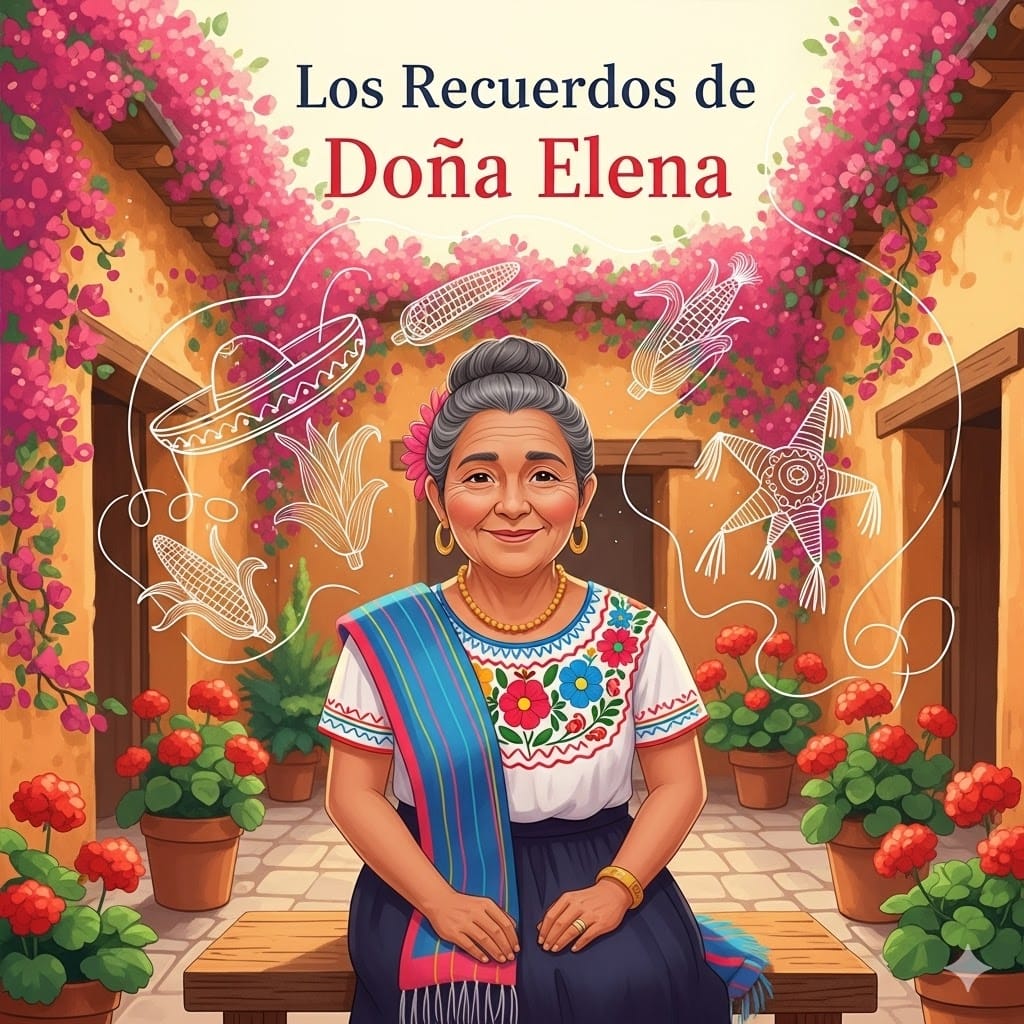
"title": "Los Recuerdos de Doña Elena",
"language": "es",
"subtitle": "A Memoir for Spanish Learners (Level A2)",
"chapters": [
{
"id": "chapter-1",
"title": "Capítulo 1: La Casa de Adobe",
"content": [
"Cuando era niña, vivía en una casa muy grande y antigua. Las paredes eran de adobe y eran muy gruesas. Mi parte favorita era el patio central. En el centro del patio, había una fuente de piedra y muchas macetas con geranios rojos y buganvilias rosas.",
"Mis padres, mis cinco hermanos y yo pasábamos mucho tiempo allí. La casa siempre estaba fresca, incluso cuando hacía mucho calor afuera. Mi madre siempre decía que la casa tenía corazón. Me gustaba sentarme en el suelo y escuchar el agua de la fuente."
],
"translation": "When I was a child, I lived in a very big and old house. The walls were made of adobe and were very thick. My favorite part was the central patio. In the center of the patio, there was a stone fountain and many pots with red geraniums and pink bougainvillea. My parents, my five siblings, and I used to spend a lot of time there. The house was always cool, even when it was very hot outside. My mother always used to say that the house had a heart. I liked to sit on the floor and listen to the water from the fountain.",
"quiz": [
{
"question": "1. ¿De qué material eran las paredes de la casa?",
"options": [
{ "text": "a) De madera", "value": "wrong" },
{ "text": "b) De ladrillo rojo", "value": "wrong" },
{ "text": "c) De adobe", "value": "correct" }
]
},
{
"question": "2. Vrai ou Faux: La casa estaba muy caliente cuando hacía calor afuera.",
"options": [
{ "text": "Verdadero", "value": "wrong" },
{ "text": "Falso", "value": "correct" }
]
},
{
"question": "3. ¿Qué le gustaba hacer a la narradora?",
"options": [
{ "text": "a) Escuchar el agua de la fuente", "value": "correct" },
{ "text": "b) Correr en la calle", "value": "wrong" },
{ "text": "c) Dormir en el patio", "value": "wrong" }
]
}
]
},
{
"id": "chapter-2",
"title": "Capítulo 2: El Olor del Maíz",
"content": [
"Recuerdo perfectamente las mañanas en mi cocina. Mi madre y yo nos levantábamos muy temprano, antes del sol. La cocina siempre olía a maíz cocido y a leña. Primero, nosotras preparábamos la masa con el metate de piedra. Era un trabajo difícil y mis brazos se cansaban.",
"Después, hacíamos las tortillas a mano. Yo ponía las tortillas en el comal caliente. Me encantaba ver cómo las tortillas se inflaban con el calor. Comíamos las tortillas frescas con un poco de sal y salsa. Ese sabor es el sabor de mi infancia."
],
"translation": "I remember the mornings in my kitchen perfectly. My mother and I used to get up very early, before the sun. The kitchen always smelled of cooked corn and firewood. First, we prepared the dough with the stone grinding stone (metate). It was hard work and my arms used to get tired. Afterwards, we made the tortillas by hand. I put the tortillas on the hot griddle (comal). I loved seeing how the tortillas puffed up with the heat. We ate the fresh tortillas with a little salt and salsa. That flavor is the flavor of my childhood.",
"quiz": [
{
"question": "1. ¿A qué hora se levantaban la madre y la hija?",
"options": [
{ "text": "a) Al mediodía", "value": "wrong" },
{ "text": "b) Antes del sol", "value": "correct" },
{ "text": "c) A las ocho", "value": "wrong" }
]
},
{
"question": "2. ¿Qué herramienta usaban para preparar la masa?",
"options": [
{ "text": "a) Una licuadora", "value": "wrong" },
{ "text": "b) Un metate de piedra", "value": "correct" },
{ "text": "c) Una máquina eléctrica", "value": "wrong" }
]
},
{
"question": "3. Verdadero o Falso: Comían las tortillas con queso y jamón.",
"options": [
{ "text": "Verdadero", "value": "wrong" },
{ "text": "Falso", "value": "correct" }
]
}
]
},
{
"id": "chapter-3",
"title": "Capítulo 3: Domingos en la Plaza",
"content": [
"Los domingos eran días especiales. Por la mañana, mi familia y yo íbamos a la iglesia. Después de la misa, todos caminábamos hacia la plaza principal del pueblo.",
"Yo siempre me ponía mi vestido favorito de color azul. En la plaza, la banda de música tocaba canciones tradicionales en el kiosco. Mis amigas y yo comprábamos nieves de limón o vainilla y dábamos vueltas alrededor del jardín. Los chicos caminaban en la dirección opuesta y nos miraban. Era una tradición muy bonita y divertida para socializar con los vecinos."
],
"translation": "Sundays were special days. In the morning, my family and I went to church. After mass, we all walked towards the town's main plaza. I always put on my favorite blue dress. In the plaza, the music band played traditional songs in the kiosk (bandstand). My friends and I bought lime or vanilla ice cream and walked in circles around the garden. The boys walked in the opposite direction and looked at us. It was a very pretty and fun tradition to socialize with the neighbors.",
"quiz": [
{
"question": "1. ¿Adónde iba la familia después de la iglesia?",
"options": [
{ "text": "a) A casa", "value": "wrong" },
{ "text": "b) A la plaza principal", "value": "correct" },
{ "text": "c) Al mercado", "value": "wrong" }
]
},
{
"question": "2. ¿De qué color era el vestido favorito de Elena?",
"options": [
{ "text": "a) Rojo", "value": "wrong" },
{ "text": "b) Azul", "value": "correct" },
{ "text": "c) Blanco", "value": "wrong" }
]
},
{
"question": "3. Verdadero o Falso: Los chicos y las chicas caminaban en la misma dirección.",
"options": [
{ "text": "Verdadero", "value": "wrong" },
{ "text": "Falso", "value": "correct" }
]
}
]
},
{
"id": "chapter-4",
"title": "Capítulo 4: El Día de Muertos",
"content": [
"Recuerdo un noviembre muy especial. Mi abuelo murió ese año, y yo estaba muy triste. Pero mi madre me explicó que él regresaría para visitarnos.",
"Nosotras decoramos un altar grande en la sala. Yo puse flores de cempasúchil naranjas en la mesa porque su color guía a los espíritus. También compramos calaveritas de azúcar y cocinamos el pan de muerto. Por la noche, encendimos las velas y pusimos la foto de mi abuelo en el centro. No sentí miedo; sentí mucho amor y paz al recordar su vida."
],
"translation": "I remember a very special November. My grandfather died that year, and I was very sad. But my mother explained to me that he would return to visit us. We decorated a big altar in the living room. I put orange marigold flowers on the table because their color guides the spirits. We also bought sugar skulls and baked 'bread of the dead.' At night, we lit the candles and put my grandfather's photo in the center. I didn't feel fear; I felt a lot of love and peace remembering his life.",
"quiz": [
{
"question": "1. ¿Por qué usan flores de cempasúchil naranjas?",
"options": [
{ "text": "a) Para decorar la iglesia", "value": "wrong" },
{ "text": "b) Para guiar a los espíritus", "value": "correct" },
{ "text": "c) Porque son baratas", "value": "wrong" }
]
},
{
"question": "2. ¿Qué sintió Elena por la noche?",
"options": [
{ "text": "a) Mucho miedo", "value": "wrong" },
{ "text": "b) Hambre y frío", "value": "wrong" },
{ "text": "c) Amor y paz", "value": "correct" }
]
},
{
"question": "3. Verdadero o Falso: Pusieron una foto de la abuela en el altar.",
"options": [
{ "text": "Verdadero", "value": "wrong" },
{ "text": "Falso", "value": "correct" }
]
}
]
},
{
"id": "chapter-5",
"title": "Capítulo 5: Jugando a la Lotería",
"content": [
"Cuando llovía, no podíamos salir a jugar. Entonces, mi padre sacaba el juego de la Lotería. Toda la familia se sentaba alrededor de la mesa grande de madera.",
"Usábamos frijoles secos para marcar las tablas. Mi padre gritaba los nombres de las cartas con una voz fuerte: '¡El Valiente!', '¡La Luna!', '¡El Borracho!'. Mis hermanos y yo reíamos mucho. Yo siempre quería ganar, pero mi hermano mayor casi siempre ganaba. Esos tardes lluviosas eran mis favoritas porque estábamos todos juntos y felices dentro de casa."
],
"translation": "When it rained, we couldn't go out to play. So, my father would take out the Lotería game. The whole family sat around the big wooden table. We used dried beans to mark the boards. My father shouted the names of the cards with a loud voice: 'The Brave One!', 'The Moon!', 'The Drunkard!'. My brothers and I laughed a lot. I always wanted to win, but my older brother almost always won. Those rainy afternoons were my favorites because we were all together and happy inside the house.",
"quiz": [
{
"question": "1. ¿Qué usaban para marcar las tablas de Lotería?",
"options": [
{ "text": "a) Monedas", "value": "wrong" },
{ "text": "b) Frijoles secos", "value": "correct" },
{ "text": "c) Piedras pequeñas", "value": "wrong" }
]
},
{
"question": "2. ¿Quién ganaba casi siempre?",
"options": [
{ "text": "a) El hermano mayor", "value": "correct" },
{ "text": "b) Elena", "value": "wrong" },
{ "text": "c) El padre", "value": "wrong" }
]
},
{
"question": "3. Verdadero o Falso: Jugaban a la Lotería cuando hacía sol.",
"options": [
{ "text": "Verdadero", "value": "wrong" },
{ "text": "Falso", "value": "correct" }
]
}
]
},
{
"id": "chapter-6",
"title": "Capítulo 6: La Serenata",
"content": [
"Nunca olvidaré mi cumpleaños número dieciocho. Estaba durmiendo cuando escuché música afuera de mi ventana. Me desperté y miré a través de las cortinas.",
"Allí estaba Pedro, un chico muy guapo. Él llevó un grupo de Mariachis para cantarme 'Las Mañanitas'. Él llevaba un traje elegante y un sombrero grande. Yo sentí mucha emoción y mi corazón latía rápido. Estaba muy nerviosa, pero también estaba enamorada. Salí al balcón y él me regaló una rosa roja. Fue la noche más romántica de mi juventud."
],
"translation": "I will never forget my eighteenth birthday. I was sleeping when I heard music outside my window. I woke up and looked through the curtains. There was Pedro, a very handsome boy. He brought a Mariachi group to sing 'Las Mañanitas' to me. He was wearing an elegant suit and a big hat. I felt a lot of emotion and my heart was beating fast. I was very nervous, but I was also in love. I went out to the balcony and he gave me a red rose. It was the most romantic night of my youth.",
"quiz": [
{
"question": "1. ¿Qué canción tocaron los Mariachis?",
"options": [
{ "text": "a) Cielito Lindo", "value": "wrong" },
{ "text": "b) La Bamba", "value": "wrong" },
{ "text": "c) Las Mañanitas", "value": "correct" }
]
},
{
"question": "2. ¿Qué le regaló Pedro a Elena?",
"options": [
{ "text": "a) Un anillo", "value": "wrong" },
{ "text": "b) Una rosa roja", "value": "correct" },
{ "text": "c) Una caja de chocolates", "value": "wrong" }
]
},
{
"question": "3. Verdadero o Falso: Elena tenía dieciocho años.",
"options": [
{ "text": "Verdadero", "value": "correct" },
{ "text": "Falso", "value": "wrong" }
]
}
]
},
{
"id": "chapter-7",
"title": "Capítulo 7: La Boda y el Mole",
"content": [
"El día de mi boda con Pedro fue una fiesta enorme. Todo el pueblo asistió a la celebración. Pero lo más importante fue la comida.",
"Mis tías cocinaron durante tres días para preparar el mole poblano. El mole es una salsa muy compleja con chiles, especias y chocolate. La salsa era espesa, oscura y rica. El sabor era un poco picante y un poco dulce. Recuerdo que todos los invitados comieron con mucho gusto. El aroma del mole llenaba el aire mientras nosotros bailábamos. Fue un banquete inolvidable."
],
"translation": "My wedding day with Pedro was a huge party. The whole town attended the celebration. But the most important thing was the food. My aunts cooked for three days to prepare the mole poblano. Mole is a very complex sauce with chilies, spices, and chocolate. The sauce was thick, dark, and rich. The flavor was a little spicy and a little sweet. I remember that all the guests ate with much pleasure. The aroma of the mole filled the air while we danced. It was an unforgettable banquet.",
"quiz": [
{
"question": "1. ¿Cuánto tiempo cocinaron las tías?",
"options": [
{ "text": "a) Tres horas", "value": "wrong" },
{ "text": "b) Un día", "value": "wrong" },
{ "text": "c) Tres días", "value": "correct" }
]
},
{
"question": "2. ¿Qué ingrediente especial tiene el mole?",
"options": [
{ "text": "a) Chocolate", "value": "correct" },
{ "text": "b) Limón", "value": "wrong" },
{ "text": "c) Queso", "value": "wrong" }
]
},
{
"question": "3. Verdadero o Falso: La boda fue una fiesta pequeña.",
"options": [
{ "text": "Verdadero", "value": "wrong" },
{ "text": "Falso", "value": "correct" }
]
}
]
},
{
"id": "chapter-8",
"title": "Capítulo 8: Tejiendo Historias",
"content": [
"Después de casarme, aprendí a trabajar con textiles. Mi suegra me enseñó a tejer rebozos y a bordar blusas. Me gustaba mucho usar hilos de colores brillantes como azul turquesa y amarillo sol.",
"Hacer un rebozo tomaba muchas semanas. Tenía que tener paciencia. El rebozo es una prenda muy útil en México; sirve para cubrirse del frío o para cargar a los bebés. Yo hice rebozos para mis hijas y, más tarde, para mis nietas. Cada hilo cuenta una historia de mis manos y de mi amor por ellas."
],
"translation": "After getting married, I learned to work with textiles. My mother-in-law taught me to weave shawls (rebozos) and to embroider blouses. I liked using bright colored threads like turquoise blue and sun yellow very much. Making a rebozo took many weeks. I had to have patience. The rebozo is a very useful garment in Mexico; it serves to cover oneself from the cold or to carry babies. I made rebozos for my daughters and, later, for my granddaughters. Every thread tells a story of my hands and my love for them.",
"quiz": [
{
"question": "1. ¿Quién le enseñó a tejer a Elena?",
"options": [
{ "text": "a) Su madre", "value": "wrong" },
{ "text": "b) Su hermana", "value": "wrong" },
{ "text": "c) Su suegra", "value": "correct" }
]
},
{
"question": "2. ¿Para qué sirve un rebozo según el texto?",
"options": [
{ "text": "a) Para decorar la mesa", "value": "wrong" },
{ "text": "b) Para cargar a los bebés", "value": "correct" },
{ "text": "c) Para limpiar la cocina", "value": "wrong" }
]
},
{
"question": "3. Verdadero o Falso: Hacer un rebozo era muy rápido.",
"options": [
{ "text": "Verdadero", "value": "wrong" },
{ "text": "Falso", "value": "correct" }
]
}
]
},
{
"id": "chapter-9",
"title": "Capítulo 9: Las Posadas",
"content": [
"Diciembre siempre traía alegría al pueblo con Las Posadas. Durante nueve noches antes de Navidad, los vecinos caminábamos por las calles con velas encendidas.",
"Cantábamos canciones para pedir 'posada' (refugio), recordando el viaje de María y José. Al final de la caminata, siempre rompíamos una piñata de siete picos. Cuando la piñata se rompió, cayeron muchas frutas: naranjas, cañas de azúcar y dulces. También bebimos ponche caliente con canela. A pesar del frío de la noche, sentíamos mucho calor humano y felicidad en la comunidad."
],
"translation": "December always brought joy to the town with Las Posadas. During nine nights before Christmas, we neighbors walked through the streets with lit candles. We sang songs to ask for 'posada' (shelter), remembering Mary and Joseph's journey. At the end of the walk, we always broke a seven-pointed piñata. When the piñata broke, many fruits fell: oranges, sugar cane, and sweets. We also drank hot punch with cinnamon. Despite the cold of the night, we felt much human warmth and happiness in the community.",
"quiz": [
{
"question": "1. ¿Qué piden las personas en las canciones?",
"options": [
{ "text": "a) Dinero", "value": "wrong" },
{ "text": "b) Posada (refugio)", "value": "correct" },
{ "text": "c) Comida gratis", "value": "wrong" }
]
},
{
"question": "2. ¿Cuántos picos tenía la piñata?",
"options": [
{ "text": "a) Cinco", "value": "wrong" },
{ "text": "b) Siete", "value": "correct" },
{ "text": "c) Diez", "value": "wrong" }
]
},
{
"question": "3. Verdadero o Falso: Las Posadas ocurren en noviembre.",
"options": [
{ "text": "Verdadero", "value": "wrong" },
{ "text": "Falso", "value": "correct" }
]
}
]
},
{
"id": "chapter-10",
"title": "Capítulo 10: La Sobremesa",
"content": [
"Ahora soy vieja, pero mi vida todavía está llena de color. Hoy es domingo y mis nietos están aquí. Acabamos de comer, pero nadie se levanta de la mesa.",
"Estamos disfrutando de 'la sobremesa'. Es el tiempo mágico después de la comida cuando hablamos y reímos. Yo les cuento las historias de la casa de adobe, del mole y de Pedro. Ellos escuchan con atención y hacen preguntas. Me siento feliz porque sé que mis recuerdos no van a desaparecer. Ellos van a guardar mis historias en sus corazones para siempre."
],
"translation": "Now I am old, but my life is still full of color. Today is Sunday and my grandchildren are here. We just finished eating, but no one gets up from the table. We are enjoying 'la sobremesa.' It is the magical time after the meal when we talk and laugh. I tell them the stories of the adobe house, the mole, and Pedro. They listen with attention and ask questions. I feel happy because I know that my memories are not going to disappear. They are going to keep my stories in their hearts forever.",
"quiz": [
{
"question": "1. ¿Qué es 'la sobremesa'?",
"options": [
{ "text": "a) El postre", "value": "wrong" },
{ "text": "b) El tiempo de hablar después de comer", "value": "correct" },
{ "text": "c) Lavar los platos", "value": "wrong" }
]
},
{
"question": "2. ¿Quiénes están visitando a Elena?",
"options": [
{ "text": "a) Sus nietos", "value": "correct" },
{ "text": "b) Sus vecinos", "value": "wrong" },
{ "text": "c) El alcalde", "value": "wrong" }
]
},
{
"question": "3. Verdadero o Falso: Elena se siente triste porque nadie la escucha.",
"options": [
{ "text": "Verdadero", "value": "wrong" },
{ "text": "Falso", "value": "correct" }
]
}
]
}
]
}