Learn about Machu Picchu while practicing English.
{
"title": "The Secret in the Clouds",
"language": "en",
"subtitle": "An English A2 Chapter Book",
"chapters": [
{
"id": "chapter-1",
"title": "Chapter 1: High in the Andes",
"content": [
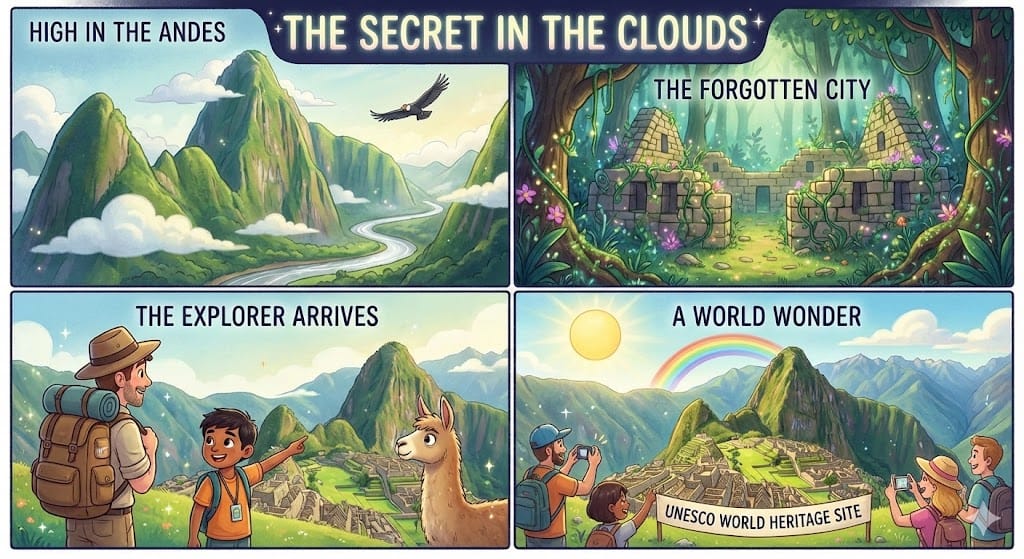
"Peru is a beautiful country in South America. It has huge mountains called the Andes. The mountains are very tall and steep. At the top, the air is thin, and it can be hard to breathe. But the view is amazing.",
"You can see green valleys and white clouds below you. The Urubamba River flows quickly at the bottom of the valley. It looks like a small silver snake from high up. This place feels very far from modern cities. It is a quiet and magical place where the earth meets the sky."
],
"translation": "เปรูเป็นประเทศที่สวยงามในทวีปอเมริกาใต้ มีภูเขาขนาดใหญ่เรียกว่าเทือกเขาแอนดีส ภูเขาสูงและชันมาก บนยอดเขานั้นอากาศเบาบาง และอาจหายใจลำบาก แต่วิวทิวทัศน์นั้นน่าทึ่ง คุณสามารถมองเห็นหุบเขาสีเขียวและเมฆสีขาวอยู่เบื้องล่าง แม่น้ำอูรูบัมบาไหลเชี่ยวอยู่ที่ก้นหุบเขา มันดูเหมือนงูสีเงินตัวเล็กๆ เมื่อมองจากที่สูง สถานที่แห่งนี้ให้ความรู้สึกไกลห่างจากเมืองที่ทันสมัย มันเป็นสถานที่ที่เงียบสงบและน่าอัศจรรย์ที่ซึ่งแผ่นดินบรรจบกับท้องฟ้า",
"quiz": [
{
"question": "1. Where is Peru located?",
"options": [
{ "text": "In Europe", "value": "wrong" },
{ "text": "In South America", "value": "correct" },
{ "text": "In Asia", "value": "wrong" }
]
},
{
"question": "2. What is the name of the river?",
"options": [
{ "text": "The Amazon", "value": "wrong" },
{ "text": "The Urubamba", "value": "correct" },
{ "text": "The Nile", "value": "wrong" }
]
},
{
"question": "3. True or False: The mountains are very small and flat.",
"options": [
{ "text": "True", "value": "wrong" },
{ "text": "False", "value": "correct" }
]
}
]
},
{
"id": "chapter-2",
"title": "Chapter 2: The Forgotten City",
"content": [
"Long ago, in the 15th century, the Inca people built a city on top of a mountain. The Incas were powerful and smart. They built palaces, temples, and houses. But about 100 years later, they left the city. Nobody knows exactly why.",
"For a long time, the city was empty. Trees and plants grew over the stone walls. The forest hid the city from the world. The Spanish conquerors came to Peru, but they never found this place. It remained a secret, sleeping under the green leaves for hundreds of years."
],
"translation": "นานมาแล้ว ในศตวรรษที่ 15 ชาวอินคาได้สร้างเมืองขึ้นบนยอดเขา ชาวอินคานั้นทรงพลังและฉลาด พวกเขาสร้างพระราชวัง วัดวาอาราม และบ้านเรือน แต่ประมาณ 100 ปีต่อมา พวกเขาทิ้งเมืองไป ไม่มีใครรู้แน่ชัดว่าทำไม เป็นเวลานานที่เมืองนี้ว่างเปล่า ต้นไม้และพืชพรรณเติบโตปกคลุมกำแพงหิน ป่าไม้ซ่อนเมืองนี้จากโลกภายนอก ผู้พิชิตชาวสเปนมาที่เปรู แต่พวกเขาไม่เคยพบสถานที่แห่งนี้ มันยังคงเป็นความลับ หลับใหลอยู่ใต้ใบไม้สีเขียวเป็นเวลาหลายร้อยปี",
"quiz": [
{
"question": "1. Who built the city?",
"options": [
{ "text": "The Spanish", "value": "wrong" },
{ "text": "The Incas", "value": "correct" },
{ "text": "The Mayans", "value": "wrong" }
]
},
{
"question": "2. Did the Spanish conquerors find the city?",
"options": [
{ "text": "Yes", "value": "wrong" },
{ "text": "No", "value": "correct" },
{ "text": "Maybe", "value": "wrong" }
]
},
{
"question": "3. True or False: The city was hidden by the forest.",
"options": [
{ "text": "True", "value": "correct" },
{ "text": "False", "value": "wrong" }
]
}
]
},
{
"id": "chapter-3",
"title": "Chapter 3: The Explorer Arrives",
"content": [
"In 1911, an American explorer named Hiram Bingham came to Peru. He was looking for lost Inca cities. He met a local farmer named Melchor Arteaga. The farmer told Bingham about some ruins high up on the mountain. A young boy, only eleven years old, guided Bingham up the steep path.",
"When Bingham arrived, he was surprised. He saw beautiful white stone walls covered in vines. He took many photos. He told the world about this \"Lost City of the Incas.\" Although locals knew about it, Bingham made it famous."
],
"translation": "ในปี ค.ศ. 1911 นักสำรวจชาวอเมริกันชื่อ ไฮแรม บิงแฮม มาที่เปรู เขากำลังมองหาเมืองอินคาที่สาบสูญ เขาพบชาวนาท้องถิ่นชื่อ เมลชอร์ อาร์เตอากา ชาวนาบอกบิงแฮมเกี่ยวกับซากปรักหักพังบนภูเขา เด็กชายตัวเล็กๆ อายุเพียงสิบเอ็ดปี นำทางบิงแฮมขึ้นไปตามทางลาดชัน เมื่อบิงแฮมมาถึง เขาประหลาดใจมาก เขาเห็นกำแพงหินสีขาวสวยงามปกคลุมไปด้วยเถาวัลย์ เขาถ่ายรูปไว้มากมาย เขาบอกชาวโลกเกี่ยวกับ \"นครสาบสูญแห่งอินคา\" นี้ แม้ว่าคนท้องถิ่นจะรู้เรื่องนี้อยู่แล้ว แต่บิงแฮมทำให้มันมีชื่อเสียง",
"quiz": [
{
"question": "1. What was Hiram Bingham looking for?",
"options": [
{ "text": "Gold", "value": "wrong" },
{ "text": "Lost Inca cities", "value": "correct" },
{ "text": "Rare birds", "value": "wrong" }
]
},
{
"question": "2. Who guided Bingham up the mountain?",
"options": [
{ "text": "The King", "value": "wrong" },
{ "text": "An old soldier", "value": "wrong" },
{ "text": "An 11-year-old boy", "value": "correct" }
]
},
{
"question": "3. True or False: Bingham was the first person ever to see the city.",
"options": [
{ "text": "True", "value": "wrong" },
{ "text": "False", "value": "correct" }
]
}
]
},
{
"id": "chapter-4",
"title": "Chapter 4: The Inca Trail",
"content": [
"Today, many tourists want to visit Machu Picchu. Some people take a train, but others like to walk. The walking path is called the \"Inca Trail.\" It is a long hike that usually takes four days. Hikers walk on original stone paths made by the Incas.",
"They walk up and down many stairs. It is physically difficult, and your legs get tired. At night, hikers sleep in tents under the stars. Along the way, they see beautiful orchids and colorful birds. It is an adventure through history and nature."
],
"translation": "ปัจจุบัน นักท่องเที่ยวจำนวนมากต้องการไปเยี่ยมชมมาชูปิกชู บางคนนั่งรถไฟ แต่บางคนชอบเดิน เส้นทางเดินนี้เรียกว่า \"เส้นทางอินคา\" (Inca Trail) เป็นการเดินป่าระยะไกลที่มักใช้เวลาสี่วัน นักเดินป่าเดินบนทางเดินหินดั้งเดิมที่ชาวอินคาสร้างขึ้น พวกเขาเดินขึ้นและลงบันไดมากมาย มันยากทางกายภาพ และขาของคุณจะเมื่อยล้า ในตอนกลางคืน นักเดินป่านอนในเต็นท์ใต้แสงดาว ตลอดทาง พวกเขาจะเห็นกล้วยไม้สวยงามและนกหลากสีสัน มันเป็นการผจญภัยผ่านประวัติศาสตร์และธรรมชาติ",
"quiz": [
{
"question": "1. How long does the Inca Trail usually take?",
"options": [
{ "text": "One day", "value": "wrong" },
{ "text": "Two weeks", "value": "wrong" },
{ "text": "Four days", "value": "correct" }
]
},
{
"question": "2. Where do hikers sleep?",
"options": [
{ "text": "In tents", "value": "correct" },
{ "text": "In hotels", "value": "wrong" },
{ "text": "In caves", "value": "wrong" }
]
},
{
"question": "3. True or False: The hike is very easy and flat.",
"options": [
{ "text": "True", "value": "wrong" },
{ "text": "False", "value": "correct" }
]
}
]
},
{
"id": "chapter-5",
"title": "Chapter 5: The Sun Gate",
"content": [
"On the last morning of the hike, people wake up very early, before the sun rises. They walk to a place called Inti Punku, or the Sun Gate. This was the main entrance to the city in the past. As the sun comes up over the mountains, the light hits the stone ruins.",
"Suddenly, the clouds move away, and you can see the whole city of Machu Picchu below. It looks like a magical kingdom in the sky. Many people cry because it is so beautiful. It is the best reward for the long walk."
],
"translation": "ในเช้าวันสุดท้ายของการเดินป่า ผู้คนตื่นนอนแต่เช้าตรู่ก่อนพระอาทิตย์ขึ้น พวกเขาเดินไปที่สถานที่ที่เรียกว่า อินติปุนกู (Inti Punku) หรือประตูพระอาทิตย์ นี่คือทางเข้าหลักสู่เมืองในอดีต เมื่อพระอาทิตย์ขึ้นเหนือภูเขา แสงจะกระทบกับซากปรักหักพังหิน ทันใดนั้น เมฆก็เคลื่อนตัวออกไป และคุณจะเห็นเมืองมาชูปิกชูทั้งเมืองอยู่เบื้องล่าง มันดูเหมือนอาณาจักรเวทมนตร์บนท้องฟ้า หลายคนร้องไห้เพราะมันสวยงามมาก มันเป็นรางวัลที่ดีที่สุดสำหรับการเดินอันยาวนาน",
"quiz": [
{
"question": "1. What is \"Inti Punku\"?",
"options": [
{ "text": "The main temple", "value": "wrong" },
{ "text": "The Sun Gate", "value": "correct" },
{ "text": "The river", "value": "wrong" }
]
},
{
"question": "2. When do hikers arrive at the Sun Gate?",
"options": [
{ "text": "At midnight", "value": "wrong" },
{ "text": "At lunch time", "value": "wrong" },
{ "text": "Early morning / Sunrise", "value": "correct" }
]
},
{
"question": "3. True or False: The view from the Sun Gate is very ugly.",
"options": [
{ "text": "True", "value": "wrong" },
{ "text": "False", "value": "correct" }
]
}
]
},
{
"id": "chapter-6",
"title": "Chapter 6: Stone Upon Stone",
"content": [
"The architecture of Machu Picchu is incredible. The Incas used huge granite stones to build their walls. Some stones are very heavy, weighing many tons. The amazing thing is that they did not use mortar or cement to hold the stones together.",
"Instead, they cut the stones perfectly. The stones fit together like a puzzle. They fit so tightly that you cannot even put a thin knife between them. This construction helps the buildings stay strong during earthquakes. Even today, engineers study these walls to learn the Incas' secrets."
],
"translation": "สถาปัตยกรรมของมาชูปิกชูนั้นเหลือเชื่อ ชาวอินคาใช้หินแกรนิตขนาดใหญ่สร้างกำแพง หินบางก้อนหนักมาก หนักหลายตัน สิ่งที่น่าทึ่งคือพวกเขาไม่ได้ใช้ปูนหรือซีเมนต์เพื่อยึดหินเข้าด้วยกัน แต่พวกเขาตัดหินอย่างสมบูรณ์แบบ หินเข้ากันได้พอดีเหมือนจิ๊กซอว์ พวกมันแนบสนิทจนคุณไม่สามารถสอดมีดบางๆ เข้าไประหว่างหินได้ การก่อสร้างแบบนี้ช่วยให้อาคารแข็งแรงระหว่างเกิดแผ่นดินไหว แม้กระทั่งทุกวันนี้ วิศวกรก็ยังศึกษากำแพงเหล่านี้เพื่อเรียนรู้ความลับของชาวอินคา",
"quiz": [
{
"question": "1. Did the Incas use cement/mortar?",
"options": [
{ "text": "Yes", "value": "wrong" },
{ "text": "No", "value": "correct" },
{ "text": "Only for the floors", "value": "wrong" }
]
},
{
"question": "2. How do the stones fit together?",
"options": [
{ "text": "Perfectly, like a puzzle", "value": "correct" },
{ "text": "Very loosely", "value": "wrong" },
{ "text": "They use glue", "value": "wrong" }
]
},
{
"question": "3. True or False: The buildings are weak against earthquakes.",
"options": [
{ "text": "True", "value": "wrong" },
{ "text": "False", "value": "correct" }
]
}
]
},
{
"id": "chapter-7",
"title": "Chapter 7: Life on the Terraces",
"content": [
"How did people eat on top of a mountain? The Incas were smart farmers. They carved flat steps into the side of the mountain. These are called terraces. The terraces look like big green stairs. They prevented the rain from washing the soil away.",
"The stone walls absorbed heat from the sun during the day. This kept the soil warm at night, so plants could grow in the cold mountain air. They grew potatoes, corn, and quinoa. They had plenty of food for everyone in the city."
],
"translation": "ผู้คนกินอาหารบนยอดเขาได้อย่างไร? ชาวอินคาเป็นเกษตรกรที่ฉลาด พวกเขาขุดขั้นบันไดแบนๆ เข้าไปที่ด้านข้างของภูเขา สิ่งเหล่านี้เรียกว่านาขั้นบันได (Terraces) นาขั้นบันไดดูเหมือนบันไดสีเขียวขนาดใหญ่ พวกมันป้องกันไม่ให้ฝนชะล้างหน้าดิน กำแพงหินดูดซับความร้อนจากดวงอาทิตย์ในตอนกลางวัน สิ่งนี้ช่วยให้ดินอบอุ่นในตอนกลางคืน พืชจึงสามารถเติบโตได้ในอากาศหนาวเย็นบนภูเขา พวกเขาปลูกมันฝรั่ง ข้าวโพด และคีนัว พวกเขามีอาหารมากมายสำหรับทุกคนในเมือง",
"quiz": [
{
"question": "1. What are the flat steps on the mountain called?",
"options": [
{ "text": "Balconies", "value": "wrong" },
{ "text": "Terraces", "value": "correct" },
{ "text": "Bridges", "value": "wrong" }
]
},
{
"question": "2. Why were the stone walls important for farming?",
"options": [
{ "text": "They looked nice.", "value": "wrong" },
{ "text": "They kept the soil warm.", "value": "correct" },
{ "text": "They scared birds away.", "value": "wrong" }
]
},
{
"question": "3. True or False: The Incas grew corn and potatoes.",
"options": [
{ "text": "True", "value": "correct" },
{ "text": "False", "value": "wrong" }
]
}
]
},
{
"id": "chapter-8",
"title": "Chapter 8: The Woolly Residents",
"content": [
"Today, nobody lives in the stone houses of Machu Picchu. But the city is not empty. There are furry animals living there. You will see llamas and alpacas walking on the grass. Llamas are large animals with long necks and big ears. They are usually white, brown, or black.",
"They help keep the grass short. They are used to people, but you must be careful. If you annoy a llama, it might spit at you! Tourists love to take selfies with these funny and cute residents of the ancient city."
],
"translation": "วันนี้ ไม่มีใครอาศัยอยู่ในบ้านหินที่มาชูปิกชู แต่เมืองนี้ไม่ว่างเปล่า มีสัตว์ขนฟูอาศัยอยู่ที่นั่น คุณจะเห็นลามะและอัลปากาเดินอยู่บนหญ้า ลามะเป็นสัตว์ขนาดใหญ่ที่มีคอยาวและหูใหญ่ พวกมันมักจะมีสีขาว สีน้ำตาล หรือสีดำ พวกมันช่วยเล็มหญ้าให้สั้น พวกมันคุ้นเคยกับผู้คน แต่คุณต้องระวัง ถ้าคุณทำให้ลามะรำคาญ มันอาจจะถ่มน้ำลายใส่คุณ! นักท่องเที่ยวชอบถ่ายรูปเซลฟี่กับผู้อยู่อาศัยที่ตลกและน่ารักเหล่านี้ของเมืองโบราณ",
"quiz": [
{
"question": "1. What animals live at Machu Picchu today?",
"options": [
{ "text": "Tigers and lions", "value": "wrong" },
{ "text": "Llamas and alpacas", "value": "correct" },
{ "text": "Dogs and cats", "value": "wrong" }
]
},
{
"question": "2. What might a llama do if it is angry?",
"options": [
{ "text": "Fly away", "value": "wrong" },
{ "text": "Spit at you", "value": "correct" },
{ "text": "Sing a song", "value": "wrong" }
]
},
{
"question": "3. True or False: The animals help eat the grass.",
"options": [
{ "text": "True", "value": "correct" },
{ "text": "False", "value": "wrong" }
]
}
]
},
{
"id": "chapter-9",
"title": "Chapter 9: The Great Mystery",
"content": [
"Archaeologists still ask many questions about Machu Picchu. Why did the Incas build it here? Some think it was a summer home for the Inca Emperor, Pachacuti. Others think it was a religious site to worship the sun. And why did they leave?",
"Did they run out of water? Was there a sickness? Or were they hiding from the Spanish? Since the Incas had no written language, they left no letters or books to explain. We can only guess. The mystery makes the place even more interesting."
],
"translation": "นักโบราณคดียังคงถามคำถามมากมายเกี่ยวกับมาชูปิกชู ทำไมชาวอินคาถึงสร้างมันที่นี่? บางคนคิดว่ามันเป็นบ้านฤดูร้อนสำหรับจักรพรรดิอินคา ปาชาคูติ คนอื่นคิดว่ามันเป็นสถานที่ทางศาสนาเพื่อบูชาดวงอาทิตย์ และทำไมพวกเขาถึงจากไป? น้ำหมดหรือเปล่า? มีโรคระบาดหรือไม่? หรือพวกเขากำลังซ่อนตัวจากชาวสเปน? เนื่องจากชาวอินคาไม่มีภาษาเขียน พวกเขาจึงไม่ได้ทิ้งจดหมายหรือหนังสือเพื่ออธิบาย เราได้แต่เดา ความลึกลับทำให้สถานที่นี้น่าสนใจยิ่งขึ้น",
"quiz": [
{
"question": "1. Do we know for sure why they left the city?",
"options": [
{ "text": "Yes, absolutely.", "value": "wrong" },
{ "text": "No, it is a mystery.", "value": "correct" },
{ "text": "Yes, they wrote a book about it.", "value": "wrong" }
]
},
{
"question": "2. Who might have lived there?",
"options": [
{ "text": "The Inca Emperor", "value": "correct" },
{ "text": "The President of Peru", "value": "wrong" },
{ "text": "Christopher Columbus", "value": "wrong" }
]
},
{
"question": "3. True or False: The Incas left many letters explaining their history.",
"options": [
{ "text": "True", "value": "wrong" },
{ "text": "False", "value": "correct" }
]
}
]
},
{
"id": "chapter-10",
"title": "Chapter 10: A World Wonder",
"content": [
"In 2007, Machu Picchu was voted one of the New Seven Wonders of the World. It is a UNESCO World Heritage site. This means it is important for all humans. Because so many people want to visit, there are new rules. The government limits the number of visitors each day.",
"This helps protect the old stones from damage. We must be respectful when we visit. We should not touch the walls or leave trash. We need to preserve this amazing \"City in the Clouds\" for our children and grandchildren to see."
],
"translation": "ในปี ค.ศ. 2007 มาชูปิกชูได้รับการโหวตให้เป็นหนึ่งในเจ็ดสิ่งมหัศจรรย์ใหม่ของโลก มันเป็นมรดกโลกของ UNESCO นี่หมายความว่ามันมีความสำคัญสำหรับมนุษย์ทุกคน เนื่องจากมีคนจำนวนมากต้องการไปเยี่ยมชม จึงมีกฎใหม่ รัฐบาลจำกัดจำนวนผู้เข้าชมในแต่ละวัน สิ่งนี้ช่วยปกป้องหินเก่าแก่จากความเสียหาย เราต้องแสดงความเคารพเมื่อเราไปเยี่ยมชม เราไม่ควรสัมผัสกำแพงหรือทิ้งขยะ เราจำเป็นต้องรักษา \"เมืองในหมู่เมฆ\" อันน่าทึ่งนี้ไว้ให้ลูกหลานของเราได้เห็น",
"quiz": [
{
"question": "1. Machu Picchu is one of the...?",
"options": [
{ "text": "Biggest cities in the world", "value": "wrong" },
{ "text": "New Seven Wonders of the World", "value": "correct" },
{ "text": "Tallest mountains", "value": "wrong" }
]
},
{
"question": "2. Why does the government limit visitors?",
"options": [
{ "text": "They don't like tourists.", "value": "wrong" },
{ "text": "To protect the site from damage.", "value": "correct" },
{ "text": "To save money.", "value": "wrong" }
]
},
{
"question": "3. True or False: We should leave trash on the ground.",
"options": [
{ "text": "True", "value": "wrong" },
{ "text": "False", "value": "correct" }
]
}
]
}
]
}